Why this blog, and why bioprophet?
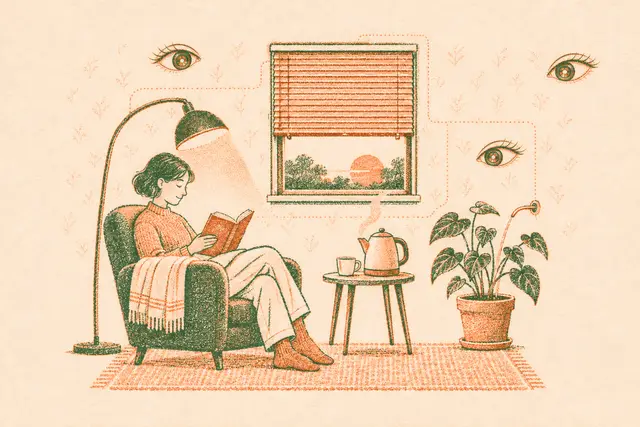
Why start a blog now, when it's hard to tell who wrote what? Was it a human, was it AI, or maybe, probably, both. In my case, definitely both.

Let’s give blogging a try. Especially now, in a world of AI, where text and ideas cost less and a human voice is hard to pick out of the noise. I’m guilty of adding to that noise too. Still, whether you arrived here by accident or on purpose, I hope you find something useful or interesting. I’m very open to discussing ideas and learning from people with different experiences or points of view, so don’t hesitate to reach out.
Why call it bioprophet? Some time ago I wanted to build a system that reads papers and summarises them based on the reader’s interests. Not just the author’s message, but the small print, the minute detail that is actually relevant to the reader. Details like that are often buried and hard to find unless you search for them. So I wanted a system that learns what a person is really interested in, the way personalised ads learn from your clicks, but for scientific interests, and definitely without the ads. When they browse papers or publications, the system, which I called bioprophet, would help them interrogate the ideas. It would ask questions about relevant topics, come up with adjacent ones and find things the researcher had not even considered. I started to build it, and I still might, but other things came up and the domain was left unused.
Today the idea looks different. AI can already do much of what I wanted that system to do, and a lot more. And building it would be fast, very fast. At the same time, people and their jobs are being replaced by complicated tensor multiplications. So the name needs a new meaning. The world is changing fast, people talk about the singularity, and it can feel like a new kind of species is taking shape in front of us. In that world, a bioprophet is a human who tries to stay on top of AI, to make it useful and to help steer it. That’s why I keep a voice here. I write with the help of AI, but the voice is mine, real person behind it. And I write it mostly to understand myself, enjoying the process itself. A bit like Bulgakov in A Young Doctor’s Notebook, albeit with a much lower level of stress. He wrote about being a young doctor alone in a rural village hospital, learning on the job. At one point he is essentially operating with a textbook open. That’s roughly how working with AI feels to me right now.
Update, 18 November 2026. Cambridge Dictionary chose human as its word of the year. Its editors point to new words like human-written and human-made, and to a “human premium”, the idea that people value something more when they know a person made it. So a human voice is still hard to pick out of the noise, but more people are now looking for it.