Codex, ChatGPT, Claude, and back
How my AI tools changed since 2022, why I kept switching between ChatGPT, Codex and Claude, and how I keep my work portable.
When ChatGPT came out at the end of November 2022, I was hesitant at first. It was a machine that predicts the next word, or a piece of it to be exact. At the time I was building predictors myself, for a very different problem. At the start-up, ours predicted which sequence would silence its target gene best. A string of letters representing DNA instead of words, but conceptually not that far off.
My first thought was how it could help me. Working mostly on my own, I was used to finding answers by searching for them, in scientific papers for biology and on Stack Overflow for software. Now there was something that simply generated them. Honestly, it wasn’t very good at first, and most answers still needed a lot of research of my own. But in an odd way, I felt it gave me guidance and a kind of company. So I wanted to see how far I could take it.
Pretty far, it turns out. And fast.
The flood
There are weeks when something new comes out every single day. It can be a new model, a new harness, a new tool, a skill, a new way of working or a new person on LinkedIn telling you that everything you did last month is obsolete. You get the fear of missing out, and you want to try all of it.
I did try a lot of it. I started with ChatGPT during the early hype in 2022, first for questions and drafts, then more and more for code. And it did help. It was frustrating at times, and copying, pasting, fixing, pasting, was annoying but even more annoying was when it didn’t deliver and you felt like you’ve exhausted all the options. So you try something else.
I switched to Codex when it became an agent that could work inside a real codebase instead of just suggesting lines. All I had to do was accept or reject its changes. I hesitated to pay for it at first, but at some point it was clearly worth it. For a while the requests felt limitless. Then it started to feel tired. I no longer got the value I had at the start, so I switched to Claude.
Claude felt completely fresh, and it was great. It cost a bit more, but I could use it so much more. Until I couldn’t. I tried several plans, switched between them, planned my work and managed the context carefully, and still kept running out. The smarter the models got, the faster my subscription ran out.
So when GPT-5 came out, I went back to where I started, with OpenAI, and Codex this time. Again it was night and day. The rush of a new release has become a drug of its own. And then there is the worry about running out of tokens, or about not using them all before the weekly reset. I was happy until Astra came out, and suddenly my subscription was not enough again. And you want to use the best model no matter what the others say. You do it because you trust it the most and when you are building something, trust matters. And so it went on, back and forth, until Opus 5.5. I honestly think this one is it.
You don’t really need a better model anymore. It can already do everything. That probably only shows the limits of my imagination, and there are plenty of things even this model can still get better at, like the usual 3D suspects and so forth. But it is impressive.
It is hard to imagine that in a few years, today might feel the way 2022 feels now.
Now I use both ChatGPT and Claude, for different things. I have tried open-weight models and other harnesses too, but I keep going back to the big two, even to their smaller models. Recently I compared them with open-weight models for image analysis. The open models did recognise what was in the images, but Luna and Haiku beat the rest at the same price point, not by a lot but still. Maybe the trust built over time with a model or a company matters as well.
Why I stopped being loyal
It may sound like a contradiction, but loyalty to one tool costs you.
The tools leapfrog each other every few months. The companies trying to outdo each other put on the best fight in town. The reactions to each release could be a Netflix reality show. I am entertained.
The best one for writing this spring may not be the best one for code this autumn. If you tie your habits, your files and your workflows to one tool, every leap becomes a migration. If you don’t, switching takes five minutes.
So I try to keep my work portable.
- Plain files over clever features. Notes, plans and instructions live in ordinary text files in my projects, not inside one tool’s memory. I haven’t needed a pile of plugins either. For most work you don’t need anything extra. The models pick things up quickly, and unless token burn worries you, it doesn’t matter.
- One rulebook per project. This site has a single file of rules that any AI agent reads before it touches anything. Switching tools doesn’t mean explaining everything again.
- One account for many models. Everybody knows OpenRouter, and it is great, but there are others like it. I use Requesty. It gives me one account that connects to many models, so trying a new one is a setting, not a new subscription. It has worked very well.
What actually changed
I think what has changed most since 2022 is my role. I used to be the one doing everything, had to do a deep dive into each minute thing I was building, while still holding the big picture. Now I mostly manage the work, and honestly, I prefer it. I can “dream” so much more. Yes, I still like to understand everything in the codebase and to take responsibility for it but evermore I trust the models more than myself. Of course one still needs judgement but times have certainly changed.
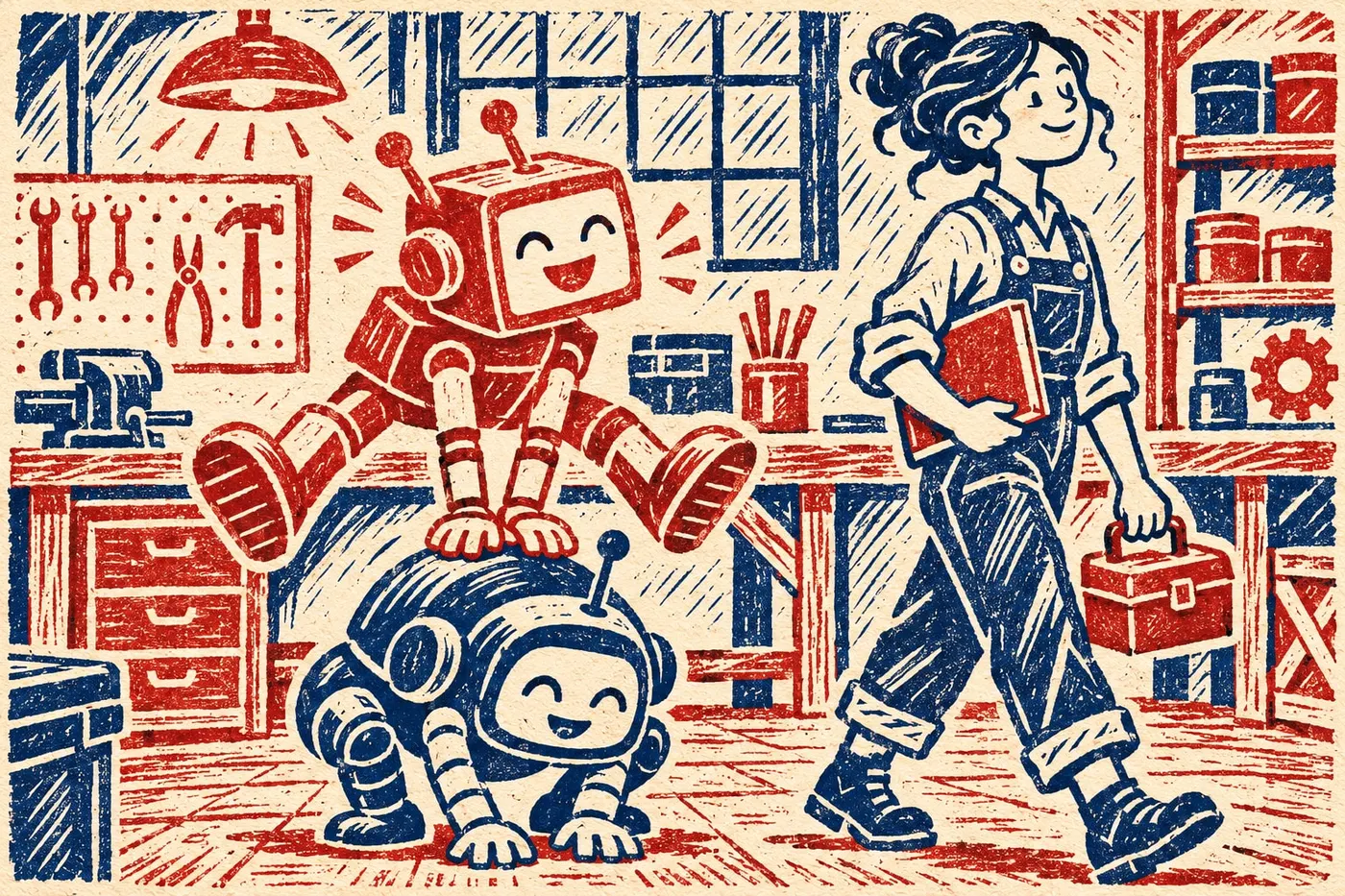
When I start with something new, I first try to define a clear goal, but often even that changes. I let the agent research and draft. I review what comes back, and it helps me decide. And then the goal becomes much clearer. It feels like managing a small, very fast team that is sometimes confidently wrong. But more and more, it is confidently right, and when it isn’t, it is usually because I under-managed it.
The skill is no longer knowing how to do everything. It’s knowing what good looks like. That doesn’t depend on which logo is in the corner of the screen.